
- All
- Product Name
- Product Keyword
- Product Model
- Product Summary
- Product Description
- Multi Field Search
Views: 0 Author: Site Editor Publish Time: 2026-08-07 Origin: Site
The clinical performance of needle-free connectors dictates patient safety in critical care environments. Their internal fluid displacement mechanics rely entirely on sub-millimeter manufacturing precision to function properly. Any variance in assembly can cause severe patient harm, including catheter occlusion or bloodstream infections. Medical device manufacturers face a complex challenge when scaling up production lines today.
You must select a highly capable needle free valve connector assembly machine to meet these stringent medical demands. The chosen equipment must handle distinct component geometries effortlessly at high speeds. It also needs to manage strict silicone compression requirements without tearing the material. Positive, negative, and neutral valves all dictate completely distinct mechanical validation standards.
We aim to bridge the gap between clinical valve design and automated manufacturing requirements. This article provides a robust, actionable decision framework for production engineers and facility managers. You will learn how to evaluate assembly equipment effectively based on your specific device architecture. We will help you shortlist systems based on tolerance control capabilities, inline testing integration, and overall operational scalability.
Negative Displacement Assembly: Requires high-speed, standard motion mechanics focused on secure housing seals and basic silicone slitting.
Positive Displacement Assembly: Demands multi-station indexing and high-precision compression tooling to assemble complex internal reservoirs and fluid-pushing mechanisms.
Neutral Displacement Assembly: Represents the highest threshold of assembly difficulty, requiring micro-tolerance press-fitting and highly sensitive force-distance monitoring to perfectly balance internal pressures.
Evaluation Core: Buyers must prioritize machines with integrated inline leak decay testing, advanced vision systems, and comprehensive IQ/OQ/PQ validation support over raw output speed alone.
Clinical requirements directly shape the mechanical engineering constraints of your automated lines. Hospitals need vascular access valves to prevent blood from clotting inside the catheter. They also fight aggressively to reduce Central Line-Associated Bloodstream Infections (CRBSI). These clinical mandates require your automated assembly processes to perform flawlessly on every single cycle. A single misaligned component creates dead space inside the housing. Bacteria breed rapidly in these microscopic gaps, compromising patient health.
Component variance dictates your entire machine architecture and tooling strategy. Traditional negative displacement designs often use simple two-piece constructions. Modern positive and neutral devices feature up to five distinct components. These include outer housings, silicone glands, rigid internal cannulas, and bottom caps. As part counts increase, continuous motion assembly becomes impossible to maintain accurately. The machine architecture must shift to precision indexing systems. Each station must stop, align, and assemble parts accurately before moving forward.
Cleanroom compliance forms the non-negotiable baseline for all medical equipment manufacturing. You cannot compromise on particulate generation during high-speed mechanical movements. Every machine must operate seamlessly inside an ISO Class 7 or 8 cleanroom environment. Engineers achieve this by using enclosed tooling zones and medical-grade stainless steel surfaces. They also route pneumatic exhaust air safely away from sensitive product areas to prevent contamination.
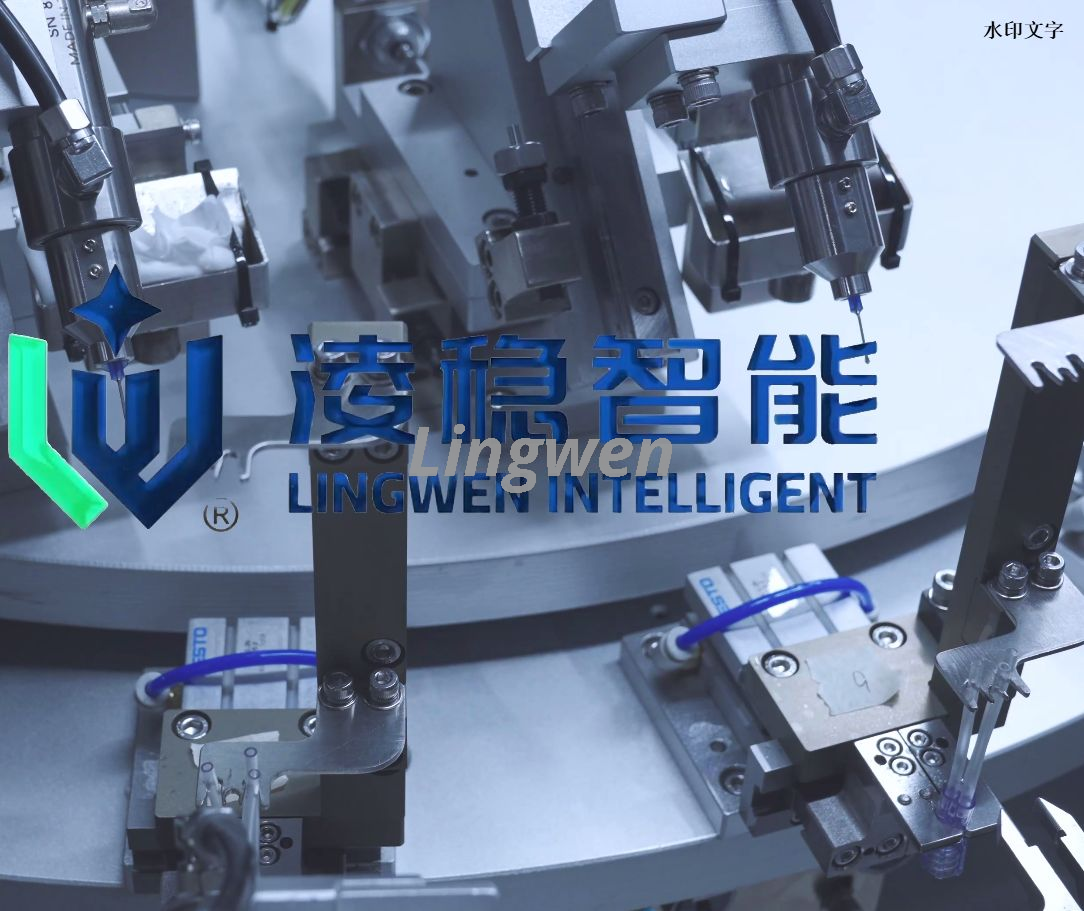
These automation systems focus primarily on the most common and traditional valve architecture. Negative displacement valves feature simpler internal designs compared to modern alternatives. They inherently pull a small amount of fluid back into the catheter when you disconnect a syringe. This simpler action requires fewer internal moving parts, streamlining the manufacturing process.
The equipment tooling relies heavily on high-speed vibratory bowl feeders. These feeders orient the outer housing and inner silicone core rapidly and consistently. The machine utilizes continuous rotary or linear indexing platforms. This setup keeps the standard two-piece or three-piece designs moving swiftly through the assembly line. Because tolerances are slightly more forgiving, the line can run at maximum velocity.
The critical assembly steps involve precise material manipulation. Automated silicone gland slitting represents a primary challenge here. The tooling blade must slice the silicone center cleanly without creating microscopic debris. Next, the machine executes a secure housing closure. Manufacturers typically use standard ultrasonic welding to melt the plastic pieces together. Alternatively, some systems apply UV bonding adhesives to secure the final seal.
Quality control setups for negative displacement lines prioritize speed alongside accuracy. Basic inline vision inspection verifies part presence before moving to the welding station. Standard positive-pressure leak testing ensures the final housing seal holds under clinical conditions. You need a reliable Needle free valve connector assembly machine to maintain these fast cycle times without dropping yield rates.
Positive displacement devices expel a tiny fluid volume outward upon syringe disconnection. This mechanical action clears lingering blood from the catheter tip automatically. The system focus shifts entirely toward handling complex internal geometries. Your assembly equipment must build intricate fluid reservoirs capable of holding and pushing this fluid. This requires a fundamental upgrade in automation sophistication.
Tooling and handling demand highly stable precision indexing dials. Standard continuous tracks often introduce too much vibration for multi-part internal alignment. The machine aligns internal cannulas and silicone matrices delicately. It must never crush or permanently deform the delicate displacement reservoir during insertion. The tooling acts with careful precision to preserve the material's elastic memory.
The critical assembly steps involve multiple synchronized stages. You cannot force a positive displacement valve together in a single press. The machine relies on multi-stage silicone compression and insertion mechanisms. Actuators compress the seal gradually to avoid tearing the medical-grade material. Furthermore, friction-free alignment of the internal mechanical push-components is essential. The internal spike must slide into the silicone housing perfectly straight.
Advanced 360-degree vision systems sit at the core of the quality control process. Multiple cameras verify internal component seating prior to the final ultrasonic closure. Specialized flow-testing modules verify the positive displacement function inline. You must invest in a specialized Needle free valve connector assembly machine to accurately process these sensitive fluid-pushing mechanisms.
Neutral valves represent the strictest manufacturing standards in the vascular access market. They must prevent any blood reflux during both syringe connection and disconnection. This clinical requirement demands perfect internal volume balance within the device. Even the slightest assembly error compromises the neutral fluid mechanics completely.
The tooling requirements shift away from basic pneumatics to servo-driven micro-tolerance hardware. Standard cylinders lack the fine, repeatable control needed here. The assembly process heavily utilizes automated force-distance monitoring. High-resolution sensors track exactly how hard and how far a part moves during insertion. This ensures parts mate to exact depths. It prevents the assembly process from deforming the critical silicone fluid path.
Critical assembly steps include absolute zero-variance press-fitting. Even a micron of angular misalignment ruins the neutral displacement effect. The machine also handles specialized anti-microbial coated components frequently. Mechanical grippers must manipulate these treated parts gently. Scratches from harsh tooling will degrade the surface integrity and ruin the anti-microbial efficacy.
Quality control setups use highly sensitive leak decay testing modules. Standard positive pressure tests cannot detect the micro-leaks that ruin neutral valves. Inline pressure differential monitoring tracks the air flow through the assembled valve dynamically. The system aggressively rejects assemblies that deviate by even fractions of a millimeter in their component stack-up.
Table: Core Parameter Comparison Across Architectures
| Displacement Profile | Primary Handling Mechanism | Key Assembly Action | Critical Quality Control Step |
|---|---|---|---|
| Negative | High-speed continuous rotary track | Single-stroke press and weld | Basic positive-pressure leak testing |
| Positive | Precision indexing dials | Multi-stage silicone compression | Flow-testing & 360° internal vision |
| Neutral | Servo-driven micro-tooling | Zero-variance press-fitting | Force-distance tracking & leak decay |
Selecting the best equipment requires a structured, multi-disciplinary evaluation framework. You must look far beyond raw output speed to determine true manufacturing viability. Evaluate the following pillars before committing to an equipment provider.
Scalability and OEE: Evaluate the machine's Overall Equipment Effectiveness. Does the system offer modular stations? You may need to scale from semi-automated pilot production up to fully automated high-volume output. Modular chassis frames allow engineers to plug in robotic feeding cells later without replacing the whole machine.
Tooling Flexibility: Assess changeover times critically. Can the machine switch between positive and neutral valve designs efficiently? Extended downtime for tooling swaps cripples your daily production quotas. Look for equipment featuring tool-free changeovers and quick-release pneumatic fixtures.
Inline Inspection Capabilities: Closed-loop quality control separates reliable machines from liability risks. Ensure the equipment features comprehensive vision, flow, leak, and occlusion testing. An advanced needle free valve connector assembly machine halts production immediately if defect trends emerge. This prevents defective batches from reaching packaging.
Data Traceability: Medical device manufacturing demands perfect record-keeping. Prioritize software that complies strictly with 21 CFR Part 11 regulations. You need secure electronic signatures, robust batch reporting, and unalterable audit trails. The machine software must also integrate seamlessly with your factory MES or ERP systems.
Many manufacturers underestimate the extensive validation bottleneck associated with medical automation. You must anticipate a lengthy timeline for Installation Qualification (IQ), Operational Qualification (OQ), and Performance Qualification (PQ). Your team must prove the machine builds perfect valves repeatedly under various stress conditions. Rushing this validation phase often results in regulatory audit failures down the line.
Material handling introduces highly distinct risks during the rollout phase. Feeding sticky medical-grade silicone components frustrates many seasoned automation engineers. Standard stainless steel vibratory bowls cause the silicone parts to clump together and jam. You should insist on specialized vibratory tracks. Applying medical-grade fluoropolymer coatings on these feeding tracks reduces surface friction dramatically.
Vendor support ultimately dictates your overall project timeline and long-term success. Partnering with a reliable original equipment manufacturer (OEM) makes a massive difference in deployment speed. You need localized engineering support for rapid troubleshooting during the initial ramp-up. Demand comprehensive Factory Acceptance Testing (FAT) before the machine ever leaves the vendor's floor. Follow this up with rigorous Site Acceptance Testing (SAT) protocols upon delivery to your cleanroom facility.
You must align your specific valve intellectual property directly with corresponding machine tolerance capabilities. A neutral valve demands servo-driven precision and sensitive force-distance monitoring. Conversely, a standard negative valve runs perfectly on a high-speed, cam-driven rotary system. Do not purchase generic off-the-shelf equipment blindly expecting it to adapt to your specific clinical design.
We recommend starting the procurement process by conducting a rigorous audit of your component tolerances. Require proof-of-principle (PoP) testing for the most critical assembly steps before signing a contract. Silicone insertion and internal cannula alignment usually prove the most mechanically challenging aspects to automate.
Take proactive action early in your production planning phase. Consult with specialized automation engineers while your valve is still in the final design iteration. Request a customized equipment specification sheet based on your exact clinical mechanics and production volume targets. Proper planning ensures a smooth transition from prototype to compliant, high-volume market delivery.
A: Yes, but it requires highly modular tooling and programmable servo-actuators. Changeover complexity varies based on the similarity of the housing designs. Switching between disparate valve mechanics often requires swapping feeder bowls, press stations, and leak testing parameters entirely. It is possible, but dedicated machines often yield better overall equipment effectiveness.
A: Speeds range from 30 to over 120 parts per minute. Output is heavily dependent on the complexity of the valve. Neutral displacement typically requires slightly slower, more precise press-fitting to maintain internal volume balance. The depth of inline testing, such as extended leak decay parameters, also extends overall cycle times.
A: Most enterprise-grade machines feature standardized outfeed conveyors or robotic pick-and-place systems. These outfeeds are designed to seamlessly feed into downstream blister packaging or form-fill-seal (FFS) machines. Cleanroom integration requires the transfer mechanisms to maintain ISO compliance while handing off the finished valves to the packaging zone.


