
- All
- Product Name
- Product Keyword
- Product Model
- Product Summary
- Product Description
- Multi Field Search
Views: 0 Author: Site Editor Publish Time: 2026-07-17 Origin: Site
Clinical demand for positive displacement needleless connectors is surging. Hospitals rely on these critical components to reduce catheter-related bloodstream infections (CRBSIs) worldwide. This clinical necessity drives an urgent need for scaled, defect-free manufacturing processes. A positive needle free valve connector assembly machine operates as an automated, cleanroom-compatible industrial system. Engineers design it to systematically feed, assemble, lubricate, seal, and test multi-component medical valves. Precision is non-negotiable in this sector. Medical device manufacturers face intense pressure to increase daily output while maintaining absolute product sterility.
This article serves as a comprehensive technical and commercial evaluation guide. Medical device manufacturers, plant managers, and procurement engineers can use it to navigate complex equipment investments. You will learn how specialized automation solves common clinical compliance issues. We will explore which machine modules matter most for production scaling. Finally, we will outline how to navigate vendor selection effectively to ensure long-term manufacturing success.
Precision Requirement: Assembling positive displacement valves requires stricter micro-tolerances than neutral or negative valves to ensure the internal silicone piston functions correctly to prevent blood reflux.
Core Automation: Standard machines integrate vibratory feeding, precise silicone oil dosing, ultrasonic or press-fit sealing, and inline vision/pressure testing.
Procurement Focus: True machine ROI is determined by Overall Equipment Effectiveness (OEE), first-pass yield (target >99%), and seamless cleanroom compliance (ISO Class 7/8).
Implementation Reality: Successful deployment requires rigorous Factory Acceptance Testing (FAT), validation (IQ/OQ/PQ), and 21 CFR Part 11 compliant data tracking.
Hospitals face strict clinical demands. These demands dictate absolute manufacturing precision on the factory floor. Positive displacement valves utilize a unique internal mechanism. When a nurse disconnects a syringe, an internal silicone piston expands. It pushes a tiny fluid volume forward into the catheter. This action clears the catheter tip and prevents blood reflux. Assembly misalignment ruins this mechanism. Even a fraction of a millimeter of deviation can cause the piston to stick. This leaves zero room for error during production.
Many legacy facilities still rely on semi-manual assembly processes. This approach introduces significant business risks. Manual operators struggle to maintain the required micro-tolerances across thousands of units. Labor-intensive processes also increase contamination risks. Human handling naturally raises the bioburden on sensitive medical components. Furthermore, high defect rates plague manual assembly lines. Manufacturers waste expensive medical-grade plastics and silicone parts.
You can eliminate these risks by deploying a fully automated positive needle free valve connector assembly machine. Automation guarantees mechanical consistency. It handles repetitive micro-movements flawlessly. To justify the investment, plant managers must evaluate the system against specific benchmarks.
A successful machine investment must achieve three primary outcomes:
High Units Per Hour (UPH): The system must sustain high throughput without sacrificing component alignment.
Zero Cross-Contamination: Fully enclosed, touch-free processing must protect the sterile fluid pathway.
100% Inline Defect Rejection: The system must automatically identify and discard non-conforming units before they reach the final packaging stage.
Reliable part feeding forms the foundation of automated assembly. Vibratory bowl feeders sort and orient bulk components. Engineers configure these feeders specifically for medical-grade plastics like polycarbonate and PETG. Handling silicone parts presents a unique challenge. Silicone pistons are lightweight, sticky, and easily deformed. Standard bowls will jam immediately. Automation builders integrate anti-static coatings and specialized track geometries. These anti-jamming mechanisms ensure silicone components flow smoothly into the assembly track.
Valve actuation relies on friction reduction. Micro-dosing stations apply exact quantities of medical-grade silicone oil to the internal housing. This step is crucial. Too little oil causes the piston to stick. Too much oil contaminates the clinical fluid pathway. Precision dispensing valves maintain droplet accuracy down to the microliter. Once lubricated, robotic pick-and-place systems step in. Alternatively, machines use rotary dial indexing. These mechanisms seat the delicate internal piston perfectly inside the rigid housing.
Creating a hermetic seal is mandatory for fluid control. Manufacturers typically choose between two main sealing technologies. The choice depends entirely on the specific valve design and material compatibility.
Sealing Technologies Comparison Chart
| Technology | Mechanism | Ideal Material Compatibility | Primary Advantage |
|---|---|---|---|
| Ultrasonic Welding | High-frequency acoustic vibrations generate localized friction heat. | Polycarbonate, rigid thermoplastics | Creates a permanent, clean, and highly secure hermetic seal. |
| Mechanical Press-Fit | Precision force presses interlocking housing components together. | PETG, specific locking joint designs | Avoids thermal stress on sensitive internal silicone components. |
Modern assembly requires built-in quality control. Automated optical inspection (AOI) cameras scan every unit. They verify component presence, correct orientation, and structural alignment. Following visual checks, the machine performs inline pressure decay testing. Also known as leak testing, this verifies the hermetic seal. The system injects clean air into the valve and monitors for pressure drops. This confirms the positive displacement mechanism will function safely in a hospital environment.
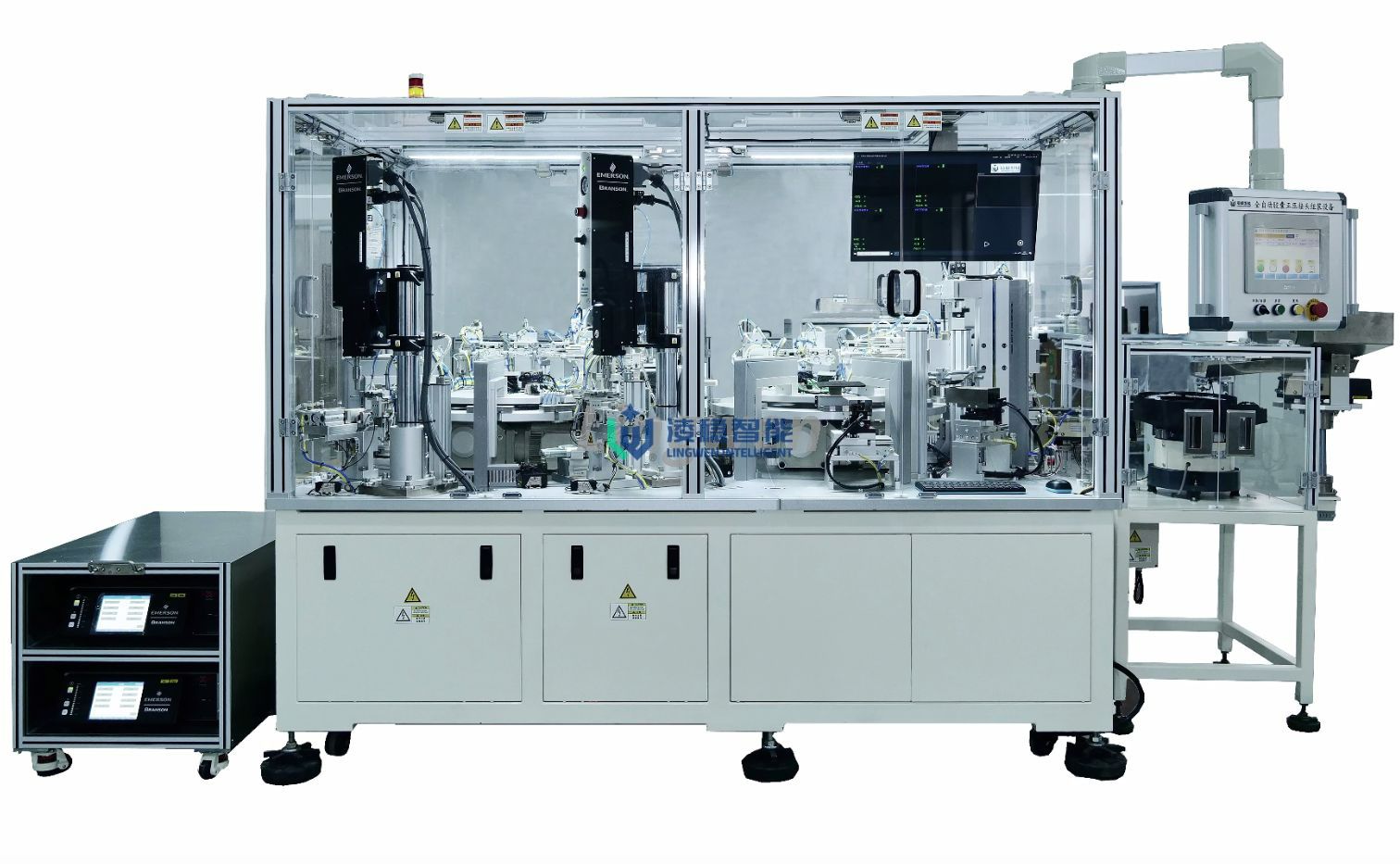
Evaluating capital equipment requires a balanced approach. High theoretical speeds often mask practical inefficiencies. Procurement engineers must look beyond basic specifications.
First, analyze production scalability by comparing UPH against yield. You should evaluate realistic operational speeds. Industry standards range from 2,000 to 4,000 UPH. However, speed alone is meaningless. You must demand guaranteed first-pass yield metrics. A machine running at maximum speed with a 10% jam rate destroys profitability. Prioritize consistent output over theoretical maximums.
Next, strictly verify Cleanroom and GMP compliance. A positive needle free valve connector assembly machine must operate safely inside regulated environments. Inspect the contact materials. Vendors must use 304 or 316L stainless steel for all product contact points. Review the machine design for contamination risks.
Cleanroom Integration Requirements
| Design Element | GMP Requirement | Impact on ISO Class 7/8 |
|---|---|---|
| Pneumatic Systems | Fully enclosed exhaust routing | Prevents oil and air particulates from entering the cleanroom. |
| Conveyor Belts | Non-particulating materials | Eliminates dust generation during continuous mechanical friction. |
| Air Filtration | Integrated HEPA filter units | Maintains localized positive pressure over open assembly zones. |
Data traceability acts as your compliance security. Regulators demand strict manufacturing records. Look for advanced PLC and HMI systems. They must support secure user access levels and immutable audit trails. Batch reporting must comply seamlessly with FDA 21 CFR Part 11 and ISO 13485 standards. Without this data backbone, validation becomes a regulatory nightmare.
Finally, assess changeover and modularity. Product designs evolve constantly. Assess how easily operators can retool the machine. Modular stations allow you to adapt to different valve geometries. This flexibility extends the usable life of your capital equipment.
Transitioning from machine purchase to daily production involves significant technical hurdles. Project managers must anticipate common implementation realities to avoid costly delays.
Handling silicone components remains the most frequent point of failure. You must address the physical reality early. Silicone valves are inherently sticky. They generate static electricity as they move through feeder tracks. Evaluate exactly how the automation vendor solves this problem. Best practices include applying specialized FDA-approved feeder coatings. Vendors should also install ionization bars across the vibratory bowls. These bars neutralize static charges, preventing pistons from clumping together.
Validation bottlenecks often disrupt launch schedules. Medical device manufacturing requires strict qualification protocols. You must factor in realistic timelines for your IQ (Installation Qualification), OQ (Operational Qualification), and PQ (Performance Qualification). Rushing these phases leads to audit failures. Ensure the machine builder provides comprehensive documentation packages to accelerate your internal validation efforts.
Maintenance overheads require careful planning. High-speed automation generates wear and tear. Ultrasonic welding horns degrade over millions of cycles. They require periodic resurfacing or replacement. Furthermore, you must establish a strict calibration frequency. Micro-dosing stations and pressure leak-testing modules drift out of alignment over time. Scheduled preventive maintenance guarantees your equipment remains within precise operational tolerances.
Choosing the right automation partner defines your manufacturing success. You need a structured approach to vet potential integrators. Do not rely solely on marketing brochures.
Begin by defining your User Requirement Specifications (URS). This document serves as your technical baseline. Map out your exact material specifications, including plastic resin types and silicone durometer ratings. Detail your required throughput targets. Document your specific factory floor constraints, including cleanroom dimensions and utility limitations. You must complete this URS before approaching any vendors.
Once you engage vendors, demand a rigid testing framework. The FAT (Factory Acceptance Test) and SAT (Site Acceptance Test) are critical milestones. Never accept a FAT using the vendor's ideal sample parts. You must demand testing using your actual molded components. Real-world parts contain flash, slight warp, and standard dimensional variations. The machine must handle these imperfections smoothly. Following a successful FAT, the SAT validates that the equipment performs identically after shipping and installation at your facility.
Automating your assembly line is a high-stakes clinical investment. A positive needle free valve connector assembly machine requires exceptional engineering precision. This precision directly impacts patient safety by ensuring effective CRBSI prevention. When components align perfectly and seals hold true, hospitals receive reliable life-saving tools.
We advise decision-makers to scrutinize potential integration partners carefully. Prioritize vendors who demonstrate proven, long-term experience. They must understand the specific intricacies of handling medical-grade silicone. They must also excel at integrating highly sensitive inline pressure testing modules.
Take immediate action to secure your production pipeline. Draft a rigid URS outlining your specific clinical tolerances and output goals. Reach out to shortlisted automation integrators today. Request a localized proof-of-concept (PoC) test to verify they can handle your most challenging component geometries.
A: Industry averages typically range from 30 to 60 parts per minute (1,800 to 3,600 UPH). The final speed depends heavily on the number of automated stations. Complex inline pressure decay testing and precise silicone lubrication durations often dictate the maximum reliable throughput.
A: While modular platforms do exist, switching between valve types is rarely plug-and-play. Positive and neutral valves feature differing internal geometries. Operators usually must perform specific tooling changeovers. This includes swapping vibratory feeding bowls, gripper fingers, and modifying lubrication station parameters.
A: The machine utilizes inline pressure decay sensors and flow testing modules. These instruments simulate actual clinical use. They inject controlled air into the sealed valve to verify hermetic integrity. The system confirms the internal piston resets correctly before discharging the unit to the accepted bin.
A: Standard industrial utilities include a stable three-phase power supply. You also need clean, dry compressed air (CDA) to drive the pneumatic cylinders and actuators. Depending on the machine design, you may also require a centralized vacuum system for specific pick-and-place mechanisms.


