
- All
- Product Name
- Product Keyword
- Product Model
- Product Summary
- Product Description
- Multi Field Search
Views: 0 Author: Site Editor Publish Time: 2026-03-09 Origin: Site
Have you ever wondered how medical catheters are made? The process of catheter assembly plays a vital role in ensuring the quality and functionality of these essential medical devices. In this article, we will explore the steps involved in catheter assembly and the crucial role the catheter assembly machine plays in streamlining the production process. You’ll learn how these machines improve precision, speed, and safety in medical device manufacturing.
IV catheter assembly machine is a specialized automated system used in the production of medical device. These machines are designed to assemble various components with different gauges, such as tubes, needles, needle hubs, cover ,flashback chamber ,and applying UV and so on. Feed components automatically .Their main function is to automate the assembly process, ensuring precision, efficiency, and consistent product quality, machine is equipped with many inspections,
CCD checking, This is an industrial camera. It could be magnified by 40 to 50 times, or even 60 times, to inspect the quality of the product assembly, Alpha value checking, needle length effective checking, needle tip checking, tip forming checking and others.
1、Utilization rate:≥95%,rejection rate:≤1%
2、Gauges for: 26G/24G/22G/20G/18G/16G/14G
3、UPH≥:2000~6000Pcs/H
4、Person:1~2
5、Power:AC220V 50HZ 24KW
6、Air pressure:0.6~0.8Mpa
7、Dimension:4500*1800*2300mm
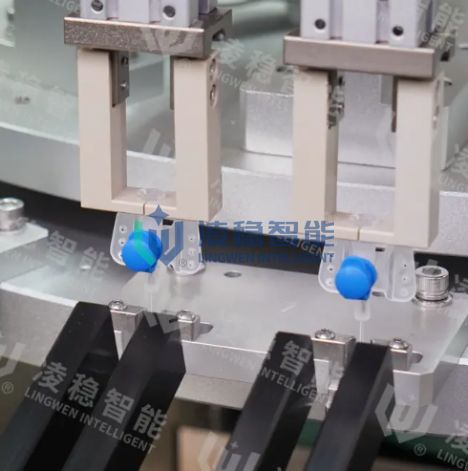
A catheter assembly machine consists of several critical components, each performing specific tasks in the assembly process:
● Automated feeders: These systems supply components, such as tubes and needles, into the machine, ensuring an uninterrupted flow of materials throughout production.
● Assembly stations: These stations handle various tasks, including inserting the needle, attaching hubs, or securing protective components to the catheter tube.
● Vision systems (CCD cameras): Vision systems use cameras to inspect the components for defects and verify that all parts are correctly aligned before moving to the next step.
● Sealing and bonding units: These parts ensure that components are securely joined, using techniques like thermal bonding, adhesive application, or laser welding.
● Quality control mechanisms: These systems continuously check for issues like leaks, functional errors, and dimensional accuracy to ensure the assembled catheter meets regulatory standards.
Catheter assembly machines streamline the manufacturing process by automating key steps, improving both speed and precision. By automating tasks like part feeding, assembly, and inspection, these machines eliminate much of the need for manual labor, enabling manufacturers to meet high-volume production demands.
A major benefit of automation is the reduction of human error. These machines perform each task with high precision, ensuring that every catheter is assembled to exact specifications. Additionally, automated machines can run continuously, allowing for faster production cycles and more consistent output.
These machines are also equipped with integrated quality control systems. For instance, vision systems can detect even the smallest defects or misalignments in parts, preventing faulty products from continuing down the assembly line. This built-in quality control ensures that the final catheter meets medical standards and regulatory requirements, providing safer products for patients.
Catheter assembly machines play a significant role in producing medical devices such as IV catheters, urinary catheters, and diagnostic catheters. These machines are crucial for maintaining efficiency and consistency, especially in high-volume production settings. As medical technologies advance, automation continues to enhance production efficiency and quality control, with innovations such as artificial intelligence and machine learning being integrated into the assembly process for even greater precision and speed.
Machine Type | Common Applications |
IV Catheter Assembly Machines | Used in the production of IV catheters, ensuring high efficiency and sterility. |
Urinary Catheter Assembly Machines | Efficiently assemble urinary catheters, meeting medical requirements for sterility and precision. |
Diagnostic Catheter Assembly Machines | Designed for complex diagnostic catheters used in procedures like electrophysiology and cardiac applications. |
The catheter assembly process involves several key stages, each designed to ensure that the final product meets stringent medical standards. Here's a step-by-step breakdown of how catheters are assembled:
1. Extrusion and Molding of the Catheter Tube The first step in the catheter assembly process is the extrusion of the catheter tube. During this stage, medical-grade materials such as polyurethane or silicone are heated and forced through molds to form the desired shape of the tube. The tube’s flexibility, thickness, and internal structure are carefully controlled to meet specific medical requirements. This step is critical for ensuring that the catheter can withstand the stresses it will face during use.
2. Braiding and Reinforcement for Strength After the catheter tube is formed, it undergoes a reinforcement process, often involving braiding. Braiding involves weaving a mesh of stainless steel or other strong materials around the catheter tube to improve its durability and strength. This step enhances the catheter’s ability to resist bending, kinking, and twisting, especially in cases where the catheter needs to navigate through tight or complex body passages. The braiding process ensures that the catheter remains structurally intact during medical procedures.
3. Bonding and Assembly of Key Components The next step involves assembling the catheter’s key components, such as the needle, catheter hub, injection port, and sealing elements. Various bonding methods, including thermal welding, adhesive bonding, or laser welding, are used to securely join these parts together. This stage is vital for ensuring that the catheter functions as intended and that all components are firmly attached, minimizing the risk of disconnection during use.
4. Sterilization and Testing Once the catheter is fully assembled, it must undergo sterilization to ensure it is free of any contaminants that could harm the patient. Sterilization is typically achieved through methods such as gamma radiation or ethylene oxide sterilization. After sterilization, the catheter is subjected to rigorous testing, including visual inspections, leak tests, and mechanical assessments, to verify its quality, integrity, and functionality. Only after passing these tests will the catheter be considered ready for medical use.
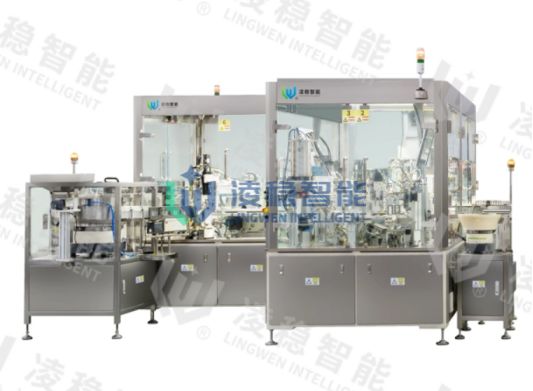
Quality control plays a crucial role throughout the catheter assembly process. Medical catheters must meet strict safety and regulatory standards to ensure patient safety and device effectiveness. Quality control checks are integrated at each stage of production, from material inspection to final product testing.
● Consistency: The use of automated machines and vision systems ensures that each catheter meets the same high standards, reducing variability and human error.
● Safety: Rigorous testing, such as leak detection and dimensional verification, helps identify any potential issues that could affect the catheter’s performance in a medical setting.
● Regulatory Compliance: Catheters must comply with medical device regulations, including those set by organizations such as the FDA and ISO. Quality control ensures that the final product meets these standards, providing assurance to both manufacturers and healthcare providers.
Catheter assembly machines can be broadly categorized into automated and manual types, each offering distinct benefits depending on the scale and needs of the production process.
Aspect | Manual Assembly | Automated Assembly |
Labor Intensity | High: Relies heavily on human workers | Low: Minimal human intervention required |
Production Speed | Slower: Limited by manual processes | Faster: Continuous operation for higher output |
Error Rate | Higher: Prone to human error | Lower: Precision ensures consistent quality |
Scalability | Limited: Best for small-scale, custom runs | High: Suitable for large-scale production |
Cost Efficiency | Higher: Requires more labor | Lower: Reduced labor and fewer errors |
Automated machines present numerous advantages that make them a superior choice for manufacturers aiming for efficiency and quality:
1. Increased Production Capacity: Automated machines can operate continuously, enabling higher throughput and faster production cycles compared to manual labor.
2. Cost Savings: Automation reduces the need for a large workforce, leading to lower overall labor costs.
3. Consistent Quality: Automated systems ensure that every catheter is assembled with the same high level of precision, reducing the risk of defects and inconsistencies.
4. Faster Turnaround: These machines streamline the manufacturing process, reducing lead times and improving time-to-market.
5. Built-In Quality Control: Automated machines often include vision systems and sensors to inspect each part during the assembly, ensuring that only products meeting quality standards proceed to the next stage.
Not all catheters are the same, and specialized machines are required for assembling different types. These machines are designed to address the unique demands of various catheters, ensuring both precision and efficiency.
● Electrophysiology Catheters: Require machines that can handle delicate components like electrodes and fine wires with extreme precision to ensure functionality in diagnostic and therapeutic applications.
● Urinary Catheters: These machines are designed to maintain sterility and precision, assembling components that ensure safe and reliable catheterization.
● Surgical Catheters: Machines used for surgical catheters are equipped to handle soft, flexible materials while maintaining tight control over the catheter’s strength and shape.
Automated machines for assembling IV catheters, including Y-type designs, are specifically engineered to handle the complexity of multi-component assembly. These machines include features such as:
● Multi-Component Integration: Capable of assembling various parts of the catheter, such as the needle, catheter tube, and protective caps, into one seamless product.
● Precision Inspection: Equipped with CCD vision systems, these machines perform detailed inspections to ensure each part is assembled correctly, minimizing defects.
● Adaptability: These machines can accommodate a range of IV catheter sizes and configurations, making them versatile and adaptable to different production needs.
Precision is essential in the catheter assembly process. Even a slight error in assembly can compromise the performance and safety of the catheter, which is critical in medical procedures. When selecting a catheter assembly machine, the most important feature to consider is its ability to deliver high precision. Automated machines that incorporate advanced control systems and real-time monitoring, such as CCD vision detection, ensure that each component is assembled accurately. This helps maintain consistent quality across all units, reducing the risk of defects and ensuring the final product meets strict medical standards.
Manufacturers face increasing demands for faster production cycles, especially in high-volume environments. Automated catheter assembly machines excel in this regard. They can operate continuously, significantly increasing production rates compared to manual assembly. With faster turnaround times, these machines allow manufacturers to meet market demands more effectively. Additionally, these machines often feature features that optimize efficiency, such as minimizing material waste and reducing downtime during setup or changeovers. As a result, they offer both speed and cost-effectiveness for large-scale production.
The ability to adapt to different catheter designs is another crucial feature to look for. A flexible catheter assembly machine can handle various types of catheters, whether they are standard IV catheters or more specialized models used in fields like electrophysiology or neurology. These machines often allow for easy adjustments to accommodate different catheter sizes or assembly requirements. Whether it’s changing the tube material or adjusting for different component configurations, a versatile machine provides manufacturers with the flexibility needed to respond to diverse customer needs and market demands.
Compliance with medical device regulations is non-negotiable. Catheter assembly machines must meet industry standards, such as those set by the FDA and ISO, to ensure the safety and efficacy of the products they produce. These regulations govern every aspect of production, including material selection, production practices, and quality control. Machines designed to comply with these standards provide manufacturers with the confidence that their products are safe for medical use. Furthermore, these machines often include features for traceability and documentation, ensuring compliance with regulatory requirements and providing proof of adherence to safety standards.
IV catheter assembly machines are widely used in medical device manufacturing. These machines come equipped with several key features that optimize the assembly process:
● CCD Vision Detection: Vision systems inspect each component for defects, ensuring that only properly assembled catheters proceed to the next stage. This feature is crucial for maintaining high standards of quality.
● Automated Control Systems: These systems enable the machine to automatically adjust production parameters, ensuring consistent quality while reducing the need for manual intervention.
● Multi-Component Assembly: Many machines are capable of assembling multiple parts of the catheter simultaneously, such as the catheter tube, needle, protective cap, and hubs. This speeds up the process and ensures a reliable final product.
Testing is a critical step in the catheter assembly process to ensure that each product is safe and effective for use in medical procedures. The primary goal of testing is to catch any defects or issues that could compromise the catheter’s functionality. Since catheters are used in sensitive medical procedures, even small defects could result in significant harm. By thoroughly testing each catheter, manufacturers can confirm that the final product meets strict safety standards.
Testing helps prevent defective products from reaching the market, ensuring only reliable, high-quality catheters are used in patient care. This process not only protects patients but also helps maintain the reputation of manufacturers by ensuring compliance with medical regulations and safety protocols.
There are several key tests conducted on assembled catheters to ensure their safety, durability, and functionality:
● Leak Tests: These tests check whether the catheter is properly sealed, ensuring it won’t allow fluids or air to leak during use. Any leakage could compromise its performance, especially in medical settings where sterility is essential.
● Mechanical Tests: Mechanical testing evaluates the strength and flexibility of the catheter. These tests ensure that the catheter can withstand the pressures and forces it will encounter during use without breaking, bending, or malfunctioning.
● Visual Inspections: Using automated vision systems, visual inspections detect any surface defects or issues in the catheter, such as cracks, misalignments, or improper bonding. These inspections are crucial in maintaining quality and identifying potential weaknesses early in the process.
● Dimensional Checks: These tests verify that the catheter meets the required size and shape specifications. Even small dimensional variations can affect the performance and compatibility of the catheter.
● Sterility Tests: As catheters must remain sterile during use, sterility tests ensure that the device is free of contaminants or bacteria before it is packaged and distributed.
Quality control is essential in catheter assembly to guarantee that the products meet the highest standards of safety and reliability. Since catheters are used in critical medical procedures, any failure could lead to complications such as infection or improper delivery of fluids or medication. Rigorous quality control procedures, including frequent testing and inspection, help ensure that each catheter is safe for patient use.
Catheter assembly is a critical process in medical device manufacturing. It ensures that catheters are assembled with precision, meeting the required safety standards. The use of specialized catheter assembly machines offers several benefits, including increased production speed, precision, and quality control. Suzhou Ling Wen Intelligent Equipment Co., Ltd. provides advanced automated solutions that streamline catheter production, ensuring high-quality, reliable products for the healthcare industry. Choosing the right assembly machine can significantly enhance production efficiency and meet industry demands.
A: A catheter assembly machine is a specialized piece of equipment used to automate the assembly of various catheter components. It ensures high precision and efficiency in production, reducing human error and meeting strict medical standards.
A: A catheter assembly machine increases production speed by automating key processes like part feeding and quality checks. It reduces labor costs and minimizes defects, resulting in more cost-effective and scalable production.
A: Maintenance of a catheter assembly machine includes regular cleaning, calibration, and part replacements. A well-maintained machine ensures consistent performance and longevity, reducing downtime and repair costs.
A: Yes, many catheter assembly machines are designed with flexibility to accommodate various catheter types, such as IV, urinary, and diagnostic catheters, by adjusting settings or using interchangeable components.


