
- All
- Product Name
- Product Keyword
- Product Model
- Product Summary
- Product Description
- Multi Field Search
Views: 0 Author: Site Editor Publish Time: 2026-04-02 Origin: Site
Have you ever wondered how IV cannulas are made? These essential medical devices require high precision in their manufacturing. In this article, we will explore the process of manufacturing an IV cannula and how the IV cannula assembly machine plays a crucial role. You’ll learn how automation enhances efficiency, ensuring safety and consistency throughout production.
The IV cannula assembly machine is a highly specialized automated system designed to streamline the production process of intravenous (IV) cannulas. These machines integrate various stages of the manufacturing process, from assembly needle , adjust needle bevel, wing body, bushing ,tube ,tip forming , final assembly and so on, the machine can be compatible with 14G/16G/18G /20G/22G/24G/26G,normally,20G/22G/24G are most popular to be used, Fully automatic assembly machine for safety pen type IV cannula ,which is made from lingwen in china, this line can be compatible with many gauges, 18G/20G/22G/24G, loading busing ,needle ,needle hub, tube ,wing house automatically ,The complete machine is designed as a pipeline, the floor area of this machine is about 95 square meters.
This can save the area of the clean room effectively. A fully IV catheter assembly machine can be operated by 2 workers, the capacity can be 1000pcs/h, 2000pcs/h, 4000pcs/h…different capacities can be met different clients requirements. The equipment is also equipped with high-end camera detection. The industry also refers to CCD, Camera inspection can be applied at different stations of the IV catheter production line,such as, needle bevel checking, effective needle length checking,effective tube length checking, UV curing checking, alpha value checking, Tip forming checking and so on.
Checking IV cannula Alpha value by fully automation .More precise, More efficient, More stable.In this process, the assembly machine automates tasks that would traditionally require manual labor, such as needle, tubing tip forming, and catheter attachment. By automating these tasks, manufacturers can achieve a higher level of consistency and reduce human error, ensuring that each IV cannula meets the required specifications. This automation is particularly important in the medical device industry, where precision and quality are paramount to patient safety.
The assembly machine also plays a crucial role in optimizing the production timeline. With the ability to produce large volumes of IV cannulas quickly, it helps meet the rising demand for medical devices, especially in hospital settings where IV cannulas are frequently used for fluid and medication administration.
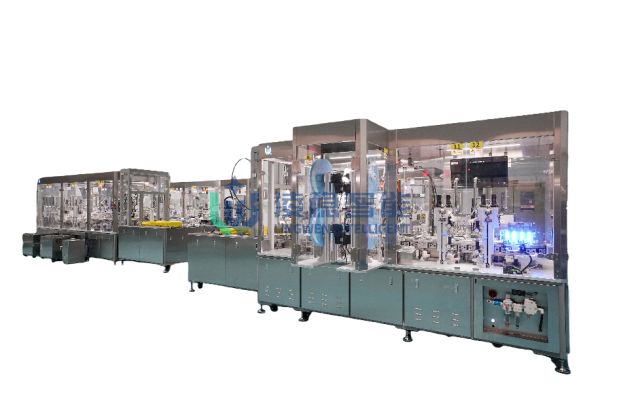
The IV cannula assembly machine is equipped with several advanced features that make it indispensable in modern medical manufacturing. These features are designed to ensure high precision, speed, and quality throughout the production process.
● High Precision: The assembly machine integrates technologies such as precision cutting, automated needle tip-forming, and real-time inspection systems. This ensures that the needles and catheters are formed to exact specifications, reducing the risk of defects and ensuring that each cannula can perform as expected during medical procedures.
● Speed and Efficiency: With the ability to handle high-volume production, the machine significantly improves manufacturing throughput. Automated systems can process hundreds or even thousands of cannulas per hour, allowing manufacturers to meet high demand while maintaining product consistency. This increased production speed also contributes to cost efficiency by reducing labor costs and production time.
● Visual Inspection Systems: One of the most important features of the IV cannula assembly machine is its integrated visual inspection system. Using CCD cameras and advanced imaging technology, the machine performs real-time quality checks to ensure that each cannula meets the required standards. These systems can detect issues such as burrs, misalignment, or dimensional inconsistencies, preventing defective products from reaching the market.
● Customizability: Depending on the specific requirements of a medical device manufacturer, the IV cannula assembly machine can be customized to produce different sizes and types of IV cannulas, such as winged or non-winged designs, or different gauge sizes. This flexibility ensures that the machine can adapt to the needs of different healthcare environments and manufacturing standards.
● Automation of Multiple Processes: The IV cannula assembly machine automates various critical steps, such as the insertion of the needle into the catheter, lubrication of the components, adhesive application, and curing. By combining these processes into one automated system, the machine reduces manual labor, enhances the precision of each step, and minimizes the risk of contamination.
Material selection is a critical aspect of IV cannula manufacturing, as it directly influences the safety, durability, and overall performance of the product. Given that IV cannulas are inserted into a patient's bloodstream, the materials must meet stringent medical standards to prevent infections or adverse reactions.
Material | Used For | Key Properties | Benefits |
Medical-Grade Stainless Steel | Needle | Strength, corrosion resistance, sharpness | Ensures precise needle tips for smooth insertion, durability. |
Biocompatible Plastics (e.g., PU, PE) | Catheter | Biocompatibility, resistance to bodily fluids | Ensures safe and comfortable insertion, resists degradation. |
Automated systems in modern manufacturing lines ensure that only these high-quality materials are used consistently, meeting necessary safety standards. These systems help achieve a uniform production process, minimizing the risk of defects and ensuring the cannulas are reliable and safe.
Once the materials are selected, they must undergo a series of preparation steps to ensure they are suitable for assembly. These processes are critical to maintaining the quality and safety of the final product.
1. Sterilization: All materials, including the needle and catheter, undergo sterilization to eliminate any harmful microorganisms. Common sterilization methods include steam or chemical sterilization.
2. Cutting and Shaping: After sterilization, the materials are cut to the required lengths. For example, the needle is cut and its tip ground to a sharp point. The catheter is extruded and shaped to precise specifications.
3. Inspection and Quality Control: Automated inspection systems, such as CCD cameras, are used to monitor the materials for any defects, ensuring only the highest-quality components proceed to the next stage of assembly.
Once prepared, the materials are ready for the assembly process. Automated systems seamlessly integrate these components into the production line, ensuring the final product meets stringent quality and safety standards.
The fabrication of the needle is a critical first step in IV cannula manufacturing, as it directly affects the performance of the final product. This process involves several stages to ensure that the needle is sharp, precise, and ready for easy insertion into a patient's vein.
1. Cutting: The process begins with cutting medical-grade stainless steel tubes to the required length. These tubes are then used to form the core of the needle. The size of the needle is carefully calculated based on the desired gauge and the specifications of the cannula.
2. Grinding: After cutting, the needle is ground to a sharp point. This step is crucial for ensuring that the needle tip is smooth and precise, which helps reduce pain during insertion and minimizes tissue damage.
3. Tip-Forming: Using advanced machines, the needle tip is further formed to create a precise, sharp point. This process is done with high accuracy, often utilizing automated systems that ensure each needle tip is identical. The automated systems are equipped with tools to control the angle and sharpness of the needle tip, which is essential for making the cannula easy to insert into the vein.
Once the needle is fabricated, the next step involves forming the catheter, which is the tube that will be inserted into the patient’s vein. The catheter must be strong, flexible, and biocompatible to ensure patient safety and comfort.
1. Extrusion Process: The catheter tube is made through an extrusion process, where medical-grade materials like polyurethane (PU) or Teflon are heated and forced through a mold to create a long, uniform tube. The material choice is crucial, as it must be biocompatible to avoid reactions when in contact with the body.
2. Uniform Wall Thickness: During extrusion, the tube’s wall thickness must be consistent to ensure that the catheter functions properly. A uniform thickness is important for controlling the flow of fluids and medications, as well as for ease of insertion. Automated systems are used to monitor and control the extrusion process, ensuring that the tubes are formed to precise specifications.
3. Cutting to Length: Once extruded, the catheter tubes are cut into the desired lengths based on the required specifications for the IV cannula. This cutting process is automated, ensuring that each tube is the right length for the final assembly.
Automated extrusion systems allow for high-speed production of catheter tubes, ensuring consistency across large batches of IV cannulas. The use of automated systems ensures that the tubing has the necessary physical properties, such as strength and flexibility, while also maintaining a high degree of uniformity.
After the needle and catheter are prepared, the final step is to assemble the components. This process is automated to ensure precision and minimize human error.
1. Needle and Catheter Assembly: The needle is inserted into the catheter, and the two components are securely joined together. This process requires careful alignment to ensure that the needle is correctly positioned within the catheter.
2. Lubrication: To reduce friction during insertion, the needle and catheter are coated with medical-grade lubricant, usually silicone oil. Automated machines apply the lubricant precisely to ensure that it does not affect the performance of the cannula or the patient’s safety.
3. Final Inspection: Once the assembly is complete, the IV cannulas undergo a series of automated tests to check for any defects, such as leaks or misalignments. High-tech visual inspection systems, such as CCD cameras, are used to monitor the integrity of the needle tip, the alignment of the needle, and the overall quality of the catheter.
4. Functional Testing: The final assembly is subjected to functional tests, such as flow rate tests and leakage tests. These tests ensure that the IV cannula can handle the necessary medical fluids and maintain its integrity under pressure.
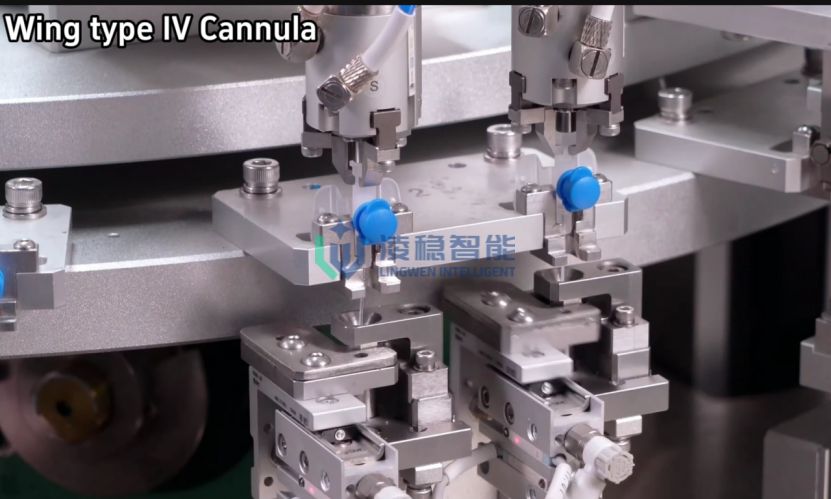
Automated systems play a critical role in maintaining high-quality standards throughout the IV cannula manufacturing process. These systems are designed to detect defects in real-time, ensuring that each product meets strict medical requirements.
● Visual Inspection with CCD Cameras: One of the most essential features in automated quality control is the use of CCD cameras for visual inspection. These cameras capture high-resolution images of the IV cannulas during production, detecting issues such as misalignment, needle damage, or inconsistencies in catheter size. The real-time feedback provided by these cameras allows for immediate adjustments to the production line, preventing defective products from moving forward.
● Sensor Integration: Alongside visual systems, various sensors are used to monitor critical aspects of the manufacturing process. Sensors measure parameters like pressure, flow, and alignment to ensure that every IV cannula is within specification. This automated feedback loop helps reduce human error and increases overall efficiency by performing tasks that would be time-consuming or difficult for manual inspection.
● Automated Sorting and Rejection: After inspection, products that meet the required standards are allowed to proceed, while defective items are automatically rejected. This level of automation ensures that only fully compliant IV cannulas are packaged and sent for sterilization, enhancing the overall quality control process.
Once the IV cannulas have been assembled, they undergo a series of rigorous tests to confirm their functionality and safety. Automated systems are built to perform these tests consistently and accurately, ensuring that the final product meets stringent quality standards.
1. Flow Rate Testing: IV cannulas must be able to handle the flow of fluids without restriction. Automated machines measure the flow rate to ensure that the cannula allows for proper fluid delivery. If the flow rate is outside the acceptable range, the cannula is rejected.
2. Leakage Testing: To ensure that the cannula maintains its integrity during use, leakage testing is performed. Automated systems pressurize the cannula and monitor for any signs of leaks. This test is vital for ensuring the safety of the device, as leaks could lead to complications in medical applications.
3. Structural Integrity Inspection: Automated systems also conduct inspections to ensure the structural integrity of the cannula. The cannula is examined for any cracks, weak points, or other signs of damage that could compromise its function. These inspections are critical for ensuring that the IV cannula can withstand the stresses it will experience during use.
4. Final Visual Inspection: After all functional tests are complete, a final visual inspection is performed to ensure the cannula meets all visual and dimensional specifications. Automated systems are used to check the alignment, clarity, and uniformity of the components, ensuring the cannula is both functional and aesthetically acceptable.
Sterilization is a crucial step in ensuring that IV cannulas are free from harmful microorganisms and safe for medical use. Since these devices are inserted directly into the bloodstream, they must meet strict hygiene standards. The key sterilization process includes Ethylene Oxide (EtO) Sterilization, which ensures that bacteria, viruses, and fungi are effectively eliminated without damaging the materials used in the cannula.
Automated systems help control temperature, pressure, and timing during the sterilization process, ensuring consistent treatment across all products. After sterilization, the cannulas are moved through subsequent stages using automated systems, preventing contamination by eliminating direct human contact.
Sterilization Step | Method | Automation Role |
Sterilization | Ethylene Oxide (EtO) sterilization | Automated systems control temperature, pressure, and timing. |
Post-Sterilization Handling | Movement of sterilized cannulas to the next stage | Automated systems prevent direct human contact, reducing contamination. |
Packaging | Blister packaging | Automated systems ensure that cannulas are securely sealed to maintain sterility. |
After sterilization, packaging ensures that the IV cannulas remain sterile and protected until use. Automated packaging systems handle this task efficiently, ensuring secure packaging and safe transport.
● Blister Packaging: IV cannulas are typically packaged in blister packs that create a secure, sterile environment. Automated systems form the blister pack, insert the cannula, and seal it tightly. This process ensures sterility is maintained throughout.
● Packaging Integration: The IV cannula assembly and packaging systems are often integrated, enabling a seamless production flow. Once assembled, the cannulas are immediately transferred to the packaging station for sealing. This integration minimizes handling and reduces contamination risks.
● Efficiency and Accuracy: Automated packaging systems speed up the process, allowing for large volumes of IV cannulas to be packed while ensuring precision. The systems also handle labeling, including batch numbers and expiration dates, minimizing human intervention and ensuring accuracy.
Regulatory compliance is a critical component in the IV cannula manufacturing process, as it ensures that these medical devices meet stringent safety and quality requirements. Two of the most recognized global standards that govern IV cannula production are ISO 13485 and FDA 510(k) certification.
● ISO 13485: This standard outlines the requirements for a quality management system (QMS) specific to the medical device industry. It focuses on ensuring that manufacturers consistently produce safe and effective products. Compliance with ISO 13485 requires that manufacturers implement rigorous processes for design, production, and testing, and continuously monitor quality throughout the lifecycle of the product.
● FDA 510(k): In the United States, the FDA 510(k) process is essential for medical devices to be legally marketed. The 510(k) submission is a premarket notification that demonstrates that the IV cannula is substantially equivalent to a device already on the market. The FDA’s approval process ensures that the cannula meets specific safety and performance standards.
Automated IV cannula assembly machines play a crucial role in maintaining compliance with regulatory standards by enhancing consistency and traceability throughout the manufacturing process.
● Reducing Human Error: One of the key advantages of automated systems is their ability to eliminate variability that can arise from manual labor. Automated assembly machines are designed to handle tasks such as needle insertion, catheter attachment, and final assembly with high precision. This consistency ensures that every IV cannula produced is identical, reducing the risk of defects and ensuring that products meet safety requirements.
● Enhancing Traceability: Automated machines are equipped with integrated tracking and documentation systems. Every step of the production process, from raw material input to final inspection, is recorded and logged. This enables manufacturers to maintain a complete record of each batch, which is crucial for regulatory compliance. Should any issues arise, manufacturers can trace back to specific components, production conditions, and inspection results to quickly identify the source of any problems.
● Batch Documentation and Inspection Logs: In addition to tracking the production process, automated systems also generate detailed inspection logs for each cannula produced. These logs include results from various quality tests, such as flow rate and leakage testing, ensuring that each IV cannula complies with the necessary standards before it is packaged and distributed.
The manufacturing of IV cannulas is a highly specialized and regulated process that benefits greatly from automation, particularly the IV cannula assembly machine. Suzhou Ling Wen Intelligent Equipment Co., Ltd. offers cutting-edge solutions in this field. Their machines enhance precision, consistency, and compliance, ensuring high-quality, safe medical devices. By automating critical processes, their systems improve production efficiency, reduce errors, and maintain product quality, making them an essential partner in the medical device industry.
A: An IV cannula assembly machine is an automated system designed to streamline the production of IV cannulas. It integrates multiple manufacturing steps, such as needle fabrication, catheter attachment, and tip-forming, to ensure precision and efficiency in high-volume production.
A: The primary benefits include increased production speed, reduced labor costs, and improved product consistency. Automated systems in the IV cannula assembly machine ensure that each cannula meets stringent quality standards, reducing human error and enhancing operational efficiency.
A: The IV cannula assembly machine helps maintain compliance by automating critical steps, ensuring consistent production quality. It integrates real-time inspection systems that document every batch, aiding in traceability and meeting regulatory requirements such as ISO 13485 and FDA 510(k).


