
- All
- Product Name
- Product Keyword
- Product Model
- Product Summary
- Product Description
- Multi Field Search
Views: 0 Author: Site Editor Publish Time: 2026-02-12 Origin: Site
Catheters are essential medical devices used in various procedures. But have you ever wondered how they are made? The process of constructing a catheter involves high precision and advanced machinery. In this article, we will explore the role of catheter assembly machines in the manufacturing process and how they ensure quality and efficiency. You’ll learn how these machines help create reliable, safe catheters for medical use.
A catheter assembly machine is an automated system designed to integrate various components of catheters used in medical procedures. Its primary role is to ensure precision, efficiency, and consistency throughout the manufacturing process. Specifically, IV Catheter Y-Type Automatic Assembly Machines are used to automate the production of intravenous (IV) catheters, ensuring that each unit meets stringent medical standards for safety and functionality.
The machine assembles parts like the catheter tube, needle, wing house, injection ports, and other essential components into a fully functional product. It also features advanced capabilities such as automatic length adjustments, real-time monitoring, and the application of adhesives or lubricants to improve catheter performance. Importantly, the machine is designed to guarantee that the finished product is sterile and free from defects, which is essential for medical devices intended for patient care.
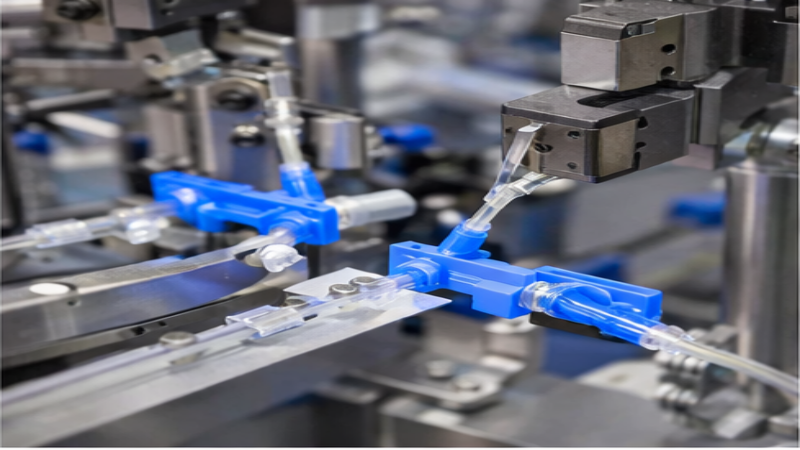
There are various types of catheter assembly machines designed to meet specific production requirements for different catheter types. Below are the main categories of machines used in catheter production:
Machine Type | Function |
Extrusion machines | Used to form the basic catheter tubing from materials like polyurethane or silicone. The material is heated and forced through a mold to create the desired shape and diameter. |
Tipping machines | Shape the tip of the catheter to ensure smooth insertion. The tip must be rounded and smooth to reduce trauma when inserted into a vein or artery. |
Braiding or reinforcement machines | Add reinforcement to the catheter to enhance strength and durability. These machines weave metal or polymer fibers into the catheter tube, especially for high-pressure applications like cardiovascular procedures. |
Assembly and testing machines | Assemble all components, such as the catheter tube, needle, needle hub, and wings. Equipped with CCD systems, these machines also check for defects like needle burrs to ensure product quality. |
The design and development phase establishes the foundation for catheter production. During this stage, specifications such as the dimensions, materials, and intended use are defined. Engineers collaborate with medical professionals to ensure the catheter is designed to meet both medical and safety standards.
Key steps in this phase include:
● Prototyping: Early prototypes are created to test the catheter’s functionality and design.
● Initial testing: Testing is done to ensure the catheter meets medical requirements such as flexibility, ease of use, and safety.
This phase is crucial for identifying any potential issues early on, ensuring the final product is both effective and safe for patient use.
Choosing the right material is critical for catheter performance. The material impacts strength, flexibility, and biocompatibility, making it a key factor in catheter construction.
Common materials include:
● Polyurethane (PU): Known for durability and chemical resistance, ideal for long-term use.
● Polytetrafluoroethylene (PTFE): Used for low friction inner linings, aiding smooth insertion.
● Silicone: Offers flexibility and softness, often used for temporary catheters.
Each material is selected based on the specific needs of the catheter, balancing factors like durability, flexibility, and patient comfort.
Extrusion and molding processes shape the catheter tubing, which is the core structure of the device.
1. Extrusion: Raw materials are heated and forced through a mold to create a continuous catheter tube of the required length and diameter.
2. Molding: After extrusion, the tubing may be molded to form specific shapes or bends, ensuring the catheter can be adapted to the needs of different medical procedures.
This process ensures the catheter tube is uniform and consistent, providing the structural foundation necessary for the device’s function.
After the tubing is formed, the catheter’s ends are refined through laser cutting and tipping.
● Laser cutting: Precise cuts are made to create the catheter's openings or to adjust the length. This technique ensures clean, accurate edges that minimize risk during insertion.
● Tipping: The tip of the catheter is shaped to a smooth, rounded form to prevent trauma during insertion. Laser or precision molding is used to achieve the desired shape.
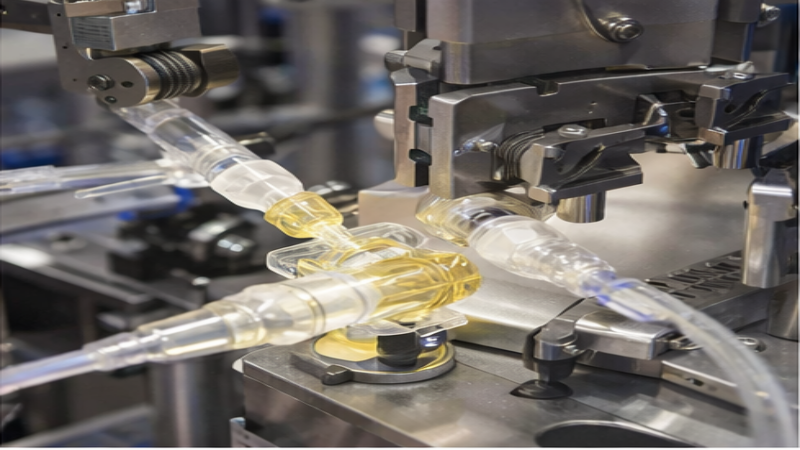
Catheter assembly machines significantly enhance production efficiency by automating key stages of manufacturing. Automation streamlines repetitive tasks such as component assembly and quality control, enabling faster production cycles while reducing human error.
By minimizing manual labor, these machines not only speed up the manufacturing process but also ensure consistency across large-scale production. Automation guarantees that each catheter is assembled precisely, meeting the required specifications and reducing defects.
A key advantage of catheter assembly machines is their integration of advanced technology for quality control. Machines equipped with CCD cameras, sensors, and laser systems can monitor the production process in real-time, detecting even minor defects.
For example, CCD systems can identify issues like burrs on needles or irregularities in the catheter tubing, ensuring that only high-quality products are sent for further processing. This precision helps maintain safety standards and reduces the risk of faulty products reaching the market.
While the initial investment in catheter assembly machines can be substantial, their long-term cost-effectiveness is significant. By automating production, these machines reduce the need for manual labor, increasing both output and efficiency.
Over time, the machines lower operational costs by minimizing defects, waste, and material costs. The reduction in product recalls and the increased consistency in manufacturing provide a clear return on investment, making them financially advantageous in the long run.
For urinary catheters, assembly machines are designed to handle delicate materials like silicone or latex. These machines ensure that the balloon and valve systems are assembled with precision, allowing the catheter to function effectively and safely within the human body.
Automation guarantees consistency, preventing errors that could compromise the catheter’s performance or patient safety.
For complex catheter designs, such as those used in cardiovascular procedures, catheter assembly machines accommodate intricate components like guidewires, reinforcements, and specialized tips. These machines ensure that all parts are assembled with precision and tested for flexibility, strength, and resistance to pressure.
Catheter manufacturers must comply with several essential regulatory standards to ensure their products meet safety, quality, and performance criteria. Among the most significant are FDA and ISO standards, which govern the entire lifecycle of medical devices.
The table below summarizes key regulatory standards relevant to catheter manufacturing:
Regulation | Description |
FDA 21 CFR Part 820 | Covers the quality system regulations (QSR) for medical devices, ensuring safe and effective production. |
ISO 13485 | Quality management systems standard for medical devices, ensuring consistent design and production. |
ISO 10993 | Focuses on the biological evaluation of medical devices to ensure biocompatibility. |
Sterilization is a critical process in catheter manufacturing, ensuring that the product is free from harmful microorganisms before reaching the patient. Two widely used sterilization methods are ethylene oxide (EtO) and gamma radiation.
EtO sterilization works by introducing the ethylene oxide gas into a sealed chamber containing the catheters. The gas penetrates the materials and kills bacteria, viruses, and fungi, while maintaining the integrity of delicate catheter components.
Gamma radiation sterilization uses high-energy gamma rays to kill microorganisms. This method is ideal for products that can withstand radiation, such as disposable medical devices. It ensures thorough sterilization while maintaining product safety.
Both methods are essential for ensuring sterility in medical catheters, allowing them to be safely used in medical procedures.
Smart catheters represent a significant advancement in catheter technology, equipped with sensors and electronic components that enable real-time monitoring. These innovations enhance the precision and safety of medical procedures by providing clinicians with immediate data on the catheter’s position, pressure, and other critical factors during use.
As smart catheters gain traction, catheter assembly machines are evolving to accommodate the integration of advanced components, such as sensors and microelectronics. These machines now include specialized features to assemble and test catheters with integrated technologies, ensuring smooth functionality and precise manufacturing.
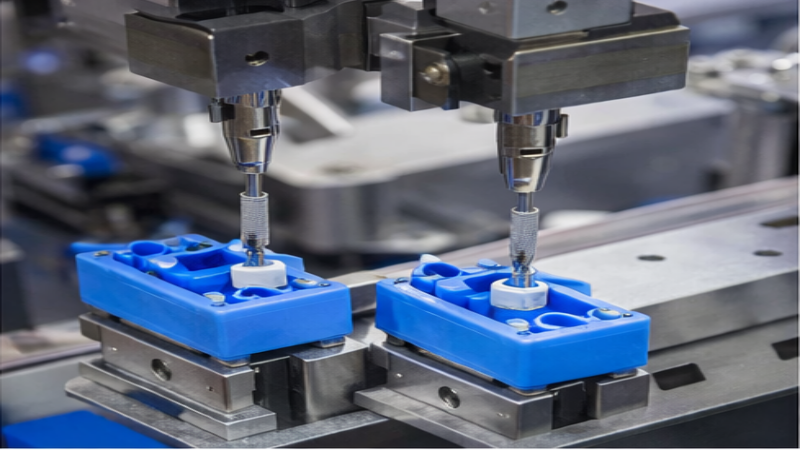
The future of catheter manufacturing is heavily influenced by advancements in automation and artificial intelligence (AI). These technologies promise to revolutionize how catheters are produced, offering greater efficiency and precision.
● Automation: With automated systems, manufacturers can achieve faster production rates and improve quality control by reducing human error.
● AI and predictive analytics: AI will enable real-time monitoring of production quality, predicting potential failures before they occur and optimizing workflows.
● 3D printing: 3D printing is expected to further disrupt catheter production, enabling highly customized catheter designs tailored to individual patient needs.
Catheter construction involves precision, material selection, and advanced machinery. Catheter assembly machines play a crucial role in automating the process, ensuring efficiency and quality. These machines integrate components like the catheter tube, needle, and wing house, maintaining high safety standards. Suzhou Ling Wen Intelligent Equipment Co., Ltd. provides innovative solutions in catheter production, offering machines that enhance efficiency and meet strict regulatory requirements. Their products ensure quality, precision, and compliance in the manufacturing process.
A: A catheter assembly machine automates the process of integrating various catheter components, ensuring precision and consistency in manufacturing, critical for meeting medical standards.
A: It enhances speed, reduces human error, and ensures consistent quality control, which is vital for large-scale catheter manufacturing.
A: Catheter assembly machines can handle various materials, including polyurethane, PTFE, and silicone, depending on the type of catheter being produced.
A: While the initial investment may be high, the machine's automation improves efficiency, reduces labor costs, and ensures fewer defects, ultimately lowering long-term production costs.
A: Yes, these machines can be customized to assemble various types of catheters, such as urinary and cardiovascular catheters, based on specific production requirements.


